
by George Banker
I’m using the definitions below as a framework to fill in the blanks looking back from 1991:
According to AI, “A race director is the primary leader responsible for planning, organizing, and executing a race event (such as a marathon, triathlon, or cycling race). They oversee everything from budgeting, marketing, and course design to safety measures, volunteer management, and emergency coordination to ensure a smooth event.”
The anatomy of a race can be linked to the organization, which includes the director and the staff.
According to AI, to leave a legacy means to create a lasting impact that extends beyond your lifetime. It is the sum of how you are remembered, the values you pass down, and the tangible or intangible difference you make for future generations.
Three major categories can describe a legacy:
Intangible Legacy (Who You Are)
Impact and Inspiration: How you make others feel and the wisdom you share.
Values and Lessons: The work ethic, kindness, or beliefs you instill in family, friends, or a community.
Memories: The personal stories and connections that live on in the hearts of those who outlive you.
A successful race committee is a sum of personalities, skills, and abilities. It takes a race director to set the stage for each person to make a meaningful contribution. The race director is a manager.
Research will support the organizations that influenced Phil Stewart, a product of his surroundings. The common denominator was the sport of running. Throughout his time in the role, the sport underwent constant change. There was one specific area that had a major impact, which was automated timing.
RFID (Radio-Frequency Identification) race timing made its debut in mass-participation road races in 1993, when the Dutch company MYLAPS (originally known as ChampionChip) introduced the first electronic timing system for runners. Technology quickly transformed how events are managed by allowing runners to get precise gun and net times.
In 1991, the Cherry Blossom 10 Miler had 3,327 finishers, the third largest to date. There were 2,441 males (74%) and 886 females (26%). 5,350 applied through the lottery. Through 2026, about 443,230 finishers have crossed the finish line of the 10-miler.
Since the race began, no two years have been the same. Stewart can attest to his tenure. Each year, participants have faced both foreseen and unforeseen challenges. There are no road race routes guaranteed in the Washington, DC area.
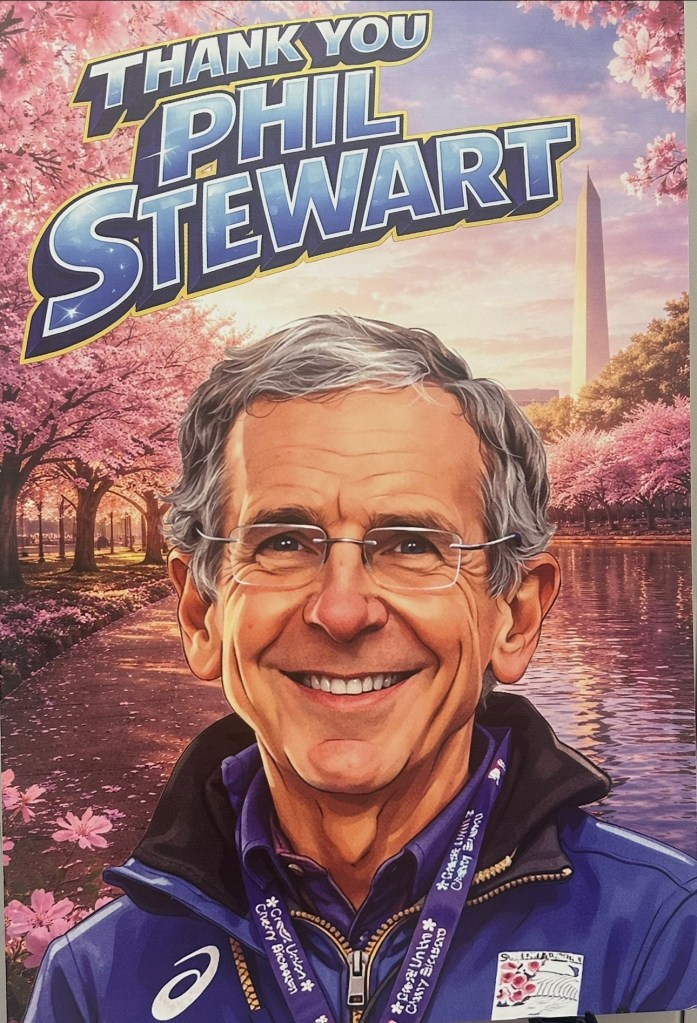
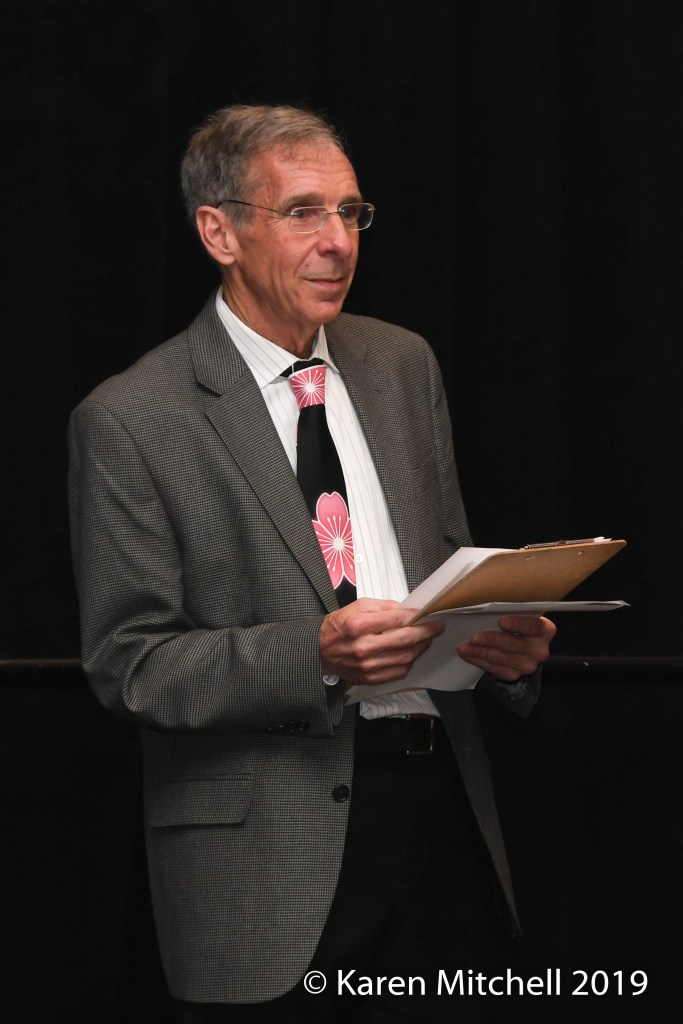
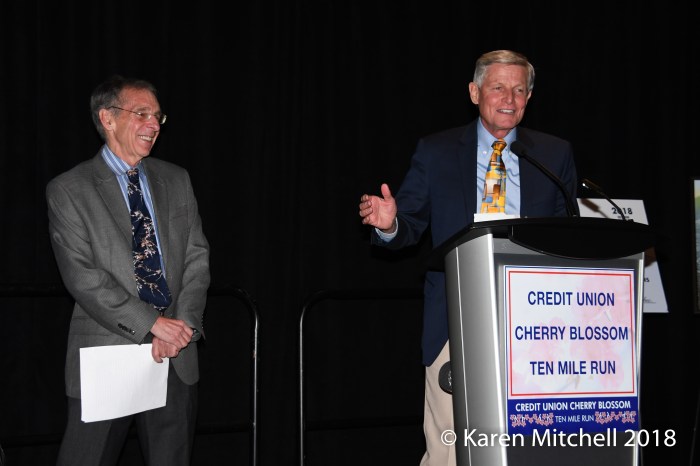
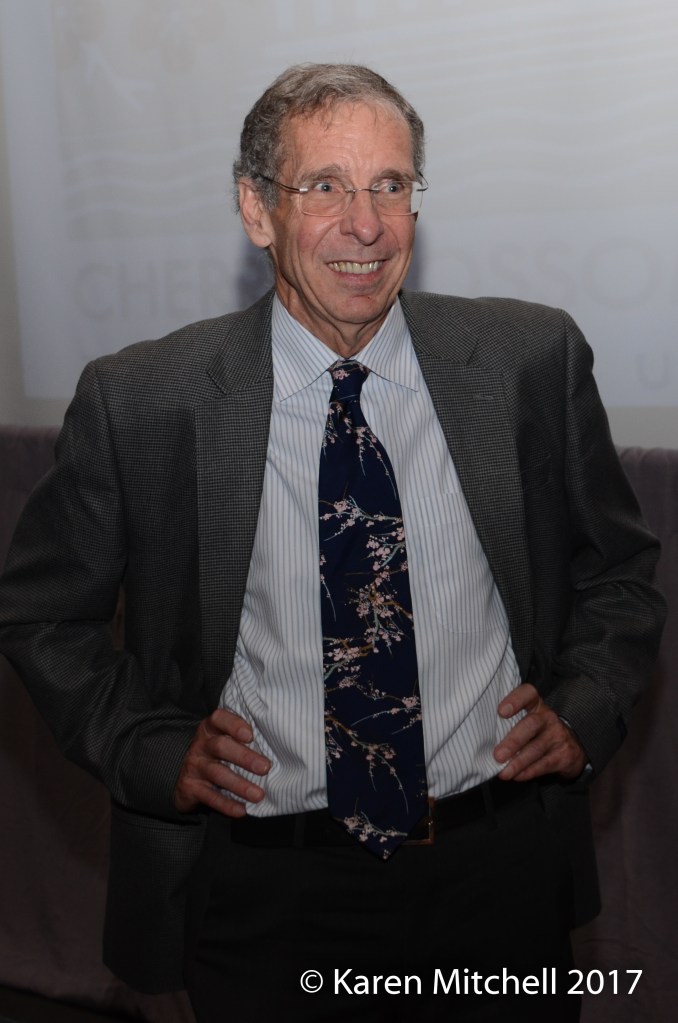
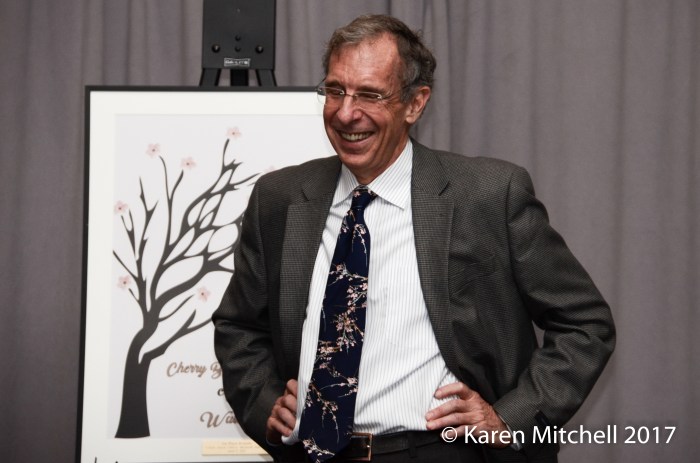
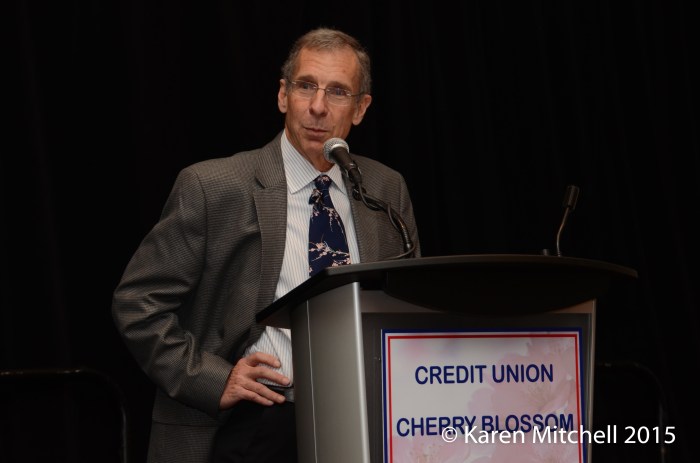
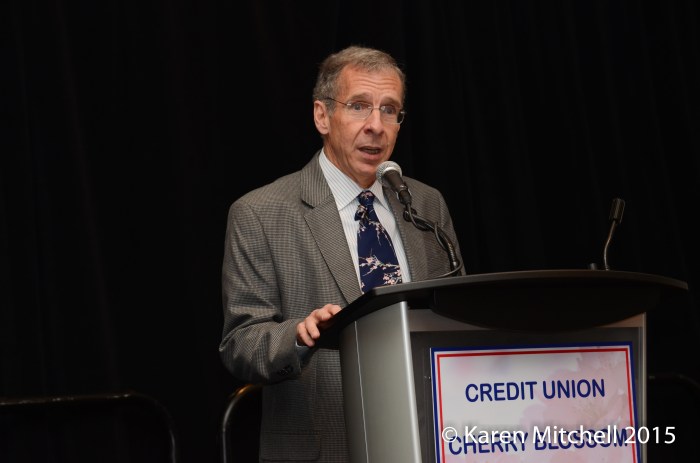
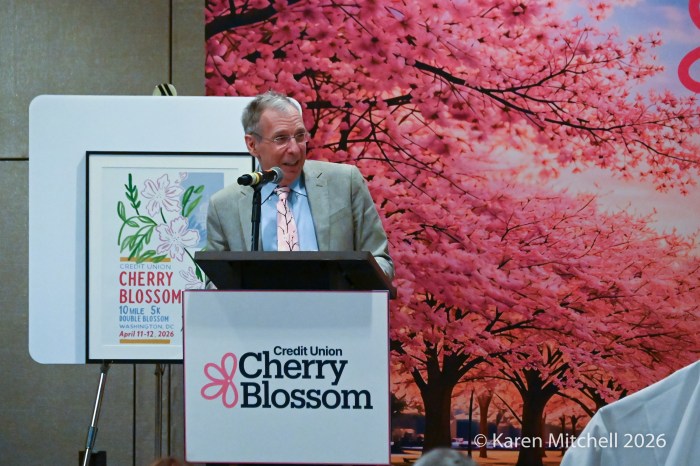
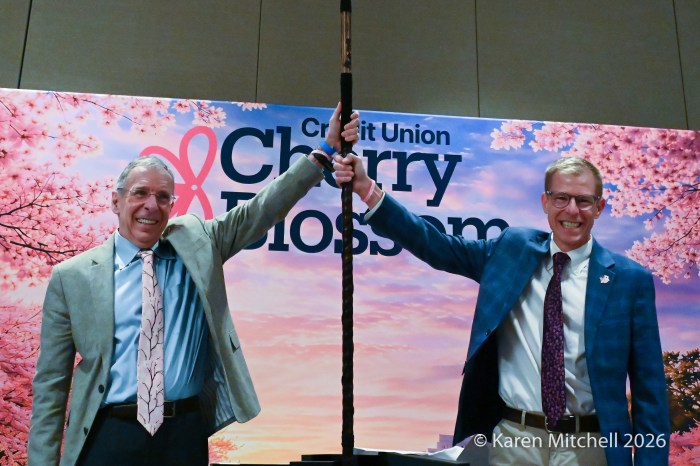
Phil Stewart shares some comments.
Looking back, what was the motivation for accepting the position as Race Director?
Besides still having no idea what I wanted to do when I grew up, even though I had just entered my 40s, I had gradually ascended through the race committee ranks and there was no one else ready to take the unpaid, volunteer Race Director position.
As you settled into the position, did you develop a vision of what direction you wanted to see the race go?
I committed to keeping one of the top road races in the country vibrant and growing.
What were some challenges you faced in the early years?
We had some challenging heads of the permitting office that issued the permit that enables us to put on the race. Getting the permit was the only time that I felt our ability to put on the race at all was potentially in jeopardy – if we could not get a permit. Fortunately, we had some staunch allies in the United States Park Police who advocated for the event on the inside. This really helped.
How did the attraction of top athletes develop?
Even before my time as Event Director, the race was staunchly supportive of allowing athletes to earn prize money in the sport. In the early 1980s, the race joined the Association of Road Racing Athletes circuit of prize-money races that challenged the amateur roles which had governed the sport for years.
Was it important to have a scenic racecourse?
We knew that putting on a race during the prime of cherry blossom season in the Nation’s Capital would be a draw, so we always wanted to ensure that the route passed as many blossoms and memorials as possible. It was a big deal in the early 2000’s when we could start and finish in the shadow of the Washington Monument.
What was your introduction to the sport?
I started running in 1967 during my junior year of high school at Woodrow Wilson High School (now Jackson-Reed High School) and enjoyed more success than I was having as the tennis player my father wanted me to be. From there it was full speed ahead to the pinnacle of qualifying for the 1976 Olympic Marathon trials with a marathon time of 2:19:58. As my time slowed, I yearned to remain in the sport.
How did you get involved with Running Times magazine?
Ed Ayres, the founder of the magazine, approached me about signing on. At that point, every runner’s dream was to work for Runner’s World, so when an opportunity to work at a fledgling running publication opened up, I jumped. Like my initial work on the race, they did not pay me a salary.
What was the running environment during your early years?
People viewed runners as a kind of offbeat counterculture movement comprising skinny, mostly men traveling around the DC area to run in DC Road Runners Club events, which probably drew about 100-200 participants. The first year I went to the Boston Marathon, there were marathon runners and StarTrek conference attendees in the hotel. Both thought the other group was weird.
What can you attribute to the growth of the Credit Union Cherry Blossom?
The hardworking organizing committee has been the key ingredient to our success.
Who were some people who influenced you?
Gar Williams and Jeff Darman, who were early DCRRC and RRCA Presidents, were both enormous influences on me as they helped launch the participatory running boom in the Washington area in the early to mid-1970s. Antiquated rules ruled running. Until shortly before this time, these rules did not allow women to run in races, nor would they permit my high school track coach to compete because he received payment as a coach.
Were there any actions taken to increase the number of female runners?
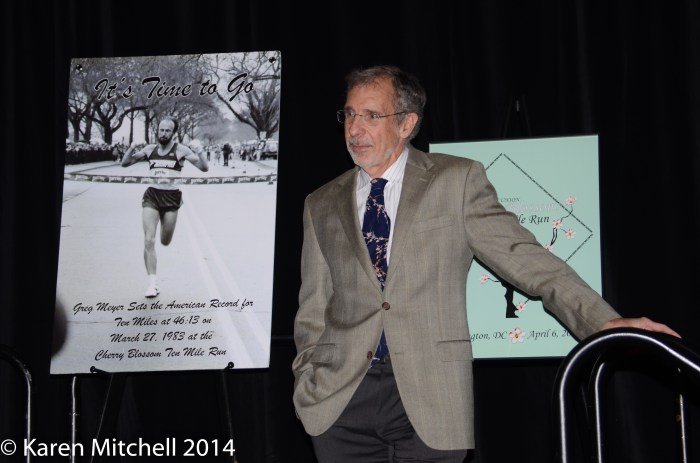
The race benefited from Title IX which opened up opportunities for women to take part in traditionally all-male sports. The race actively encouraged participation by women. In 1976, a young girl named Julie Shea set the first women’s 10-mile world record at the race.
What impact did COVID have on the race?
Obviously, it was devastating. The COVID pandemic struck full force in the U.S. in early March 2020, just three weeks before our race. We had to cancel and pivot to a virtual race at truly short notice. With COVID still raging a year later, we moved the 2021 race to September with hardly any cherry blossoms in sight.
How was the race growth managed?
A huge amount of interest in the race instituted the first 10 Mile lottery in the late 1970s. In 2027, it is likely we will need to have a lottery for the 5K race as well.
What changes would you like to see in the sport?
The sport is enjoying a running boom in the 2020s at the moment. The New Kids on the Block are in their 20s, so we are looking secure into the next half century of the Credit Union Cherry Blossom. I would like the sport to continue its commitment to inclusivity for runners of all shapes, sexes, sizes, and skin colors.
What challenges do you think the race may face moving forward?
Just continuing to produce one of the finest road races on the planet. In the short term, we may face some challenges on the course because of the proposed construction of a Triumphal Arch on Memorial Circle, which is on our racecourse. We could lose three miles of our route if changes at the East Potomac Park golf course eliminate the road around Hains Point.
What are three skills that are needed for a successful race director?
Patience, endurance, and a love of the sport.
Is there any unfinished business that you are leaving behind?
I feel like I am leaving the position of Event Director with the event in very good shape, thanks to our hardworking race committee, our thousands of volunteers, and the support from the local and national running communities.
Comments from others in the sport.
Keith Peters comments, “I cannot imagine there’s a more well-rounded, yet intimate-on-all-fronts perspective on the last 50+ years of running than Phil Stewart’s. From elite runner to consumer magazine and trade newsletter founder, editor, and reporter – to race director, Phil has, in baseball parlance, touched ‘em all. The sport is so much better off because of Phil’s unwavering commitment and passion for it.
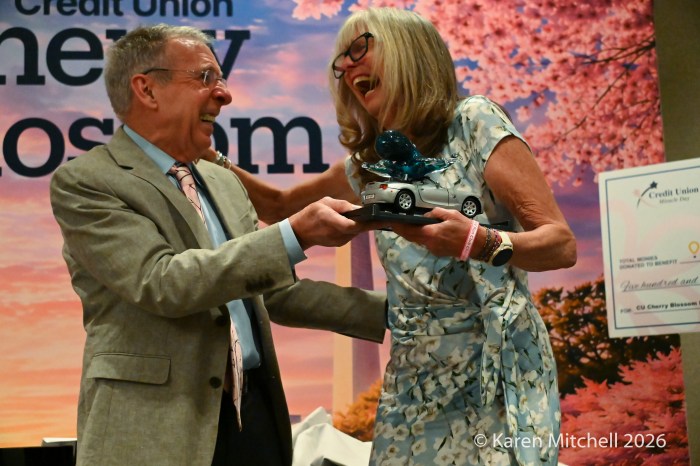
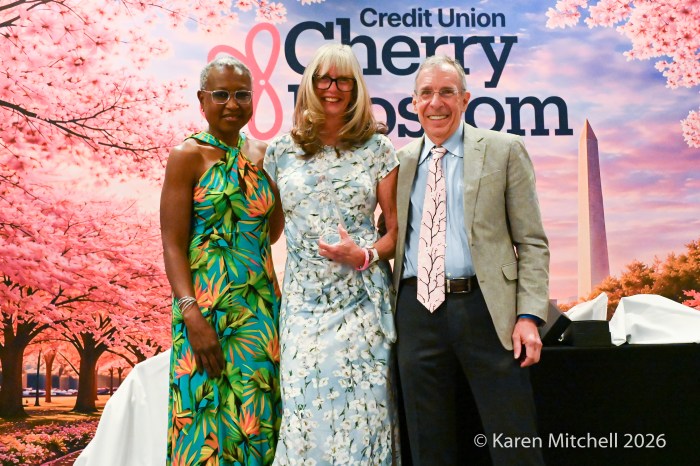
Phil Stewart’s retirement as Race Director of the Credit Union Cherry Blossom 10 Mile marks the end of an incredible era in road racing. For many years, Phil was much more than the organizer of one of the country’s best races — he was someone who genuinely cared about the sport and the people involved in it. Under his leadership, the Cherry Blossom became a first-class event that runners, volunteers, sponsors, and fans looked forward to every spring in Washington, D.C. His hard work and attention to detail helped build the race’s outstanding reputation.”
Dave McGillivray adds, “What made Phil special was the way he combined professionalism with kindness. He knew noble races are about more than timing clocks and logistics — they are about people, community, and making everyone feel welcome. Whether he was working with elite runners or someone running their very first race, Phil treated everyone with the same respect and enthusiasm. That approach helped make the Cherry Blossom not just a dominant race, but a favorite tradition for so many.”
Kathrine Switzer comments, “Phil Stewart not only was a fine race director, but he was also a visionary. He took a fun little race, and year by year it turned into a mega event that showcased our Nation’s Capitol, losing none of its unique charm and close community. Phil was on top of personalities, trends, and important topics as a journalist, organizer, and pioneer of the sport we all love so much.”
Jeff Darman, “Phil took a good race to much higher heights through his dedication to the event. He assembled a top-notch team and instilled a desire for excellence. The measure of a race director who steps down is what he passes on. He is passing on a gem, and his legacy will be there forever.”
Creigh Kelley stated, “Beginning in the early 80s, Phil affected my life.” He helped me look better than I was when I took over the National Chair of USATF (then TAC) Men’s Long Distance Running Committee. He always had the keenest wisdom and often provided guidance when I needed it most.
Rolling through over four decades, he showed all of us what it takes to be an excellent Race Director, including publishing the best handbook on the planet!
He challenged me twice in Boston and humbled me both times!
His attention to detail is legendary and provided us all with roadmaps for making every event even better!
Here’s to his next four decades of having fun and continuing to live his well-earned future!”
Becky Lambros stated, “ As Phil Stewart retires after 35 years of leadership, the Credit Union Cherry Blossom community celebrates an extraordinary career and an even more extraordinary friend. Through his vision, dedication, and unwavering commitment, Phil helped shape the event into one of the premier road races in the country and a true “Runner’s Rite of Spring.”
But Phil’s legacy extends far beyond the race itself. Over the years, he has touched countless lives through his steady leadership, attention to detail, and genuine care for the people around him. Participants, volunteers, sponsors, and fellow committee members have all benefited from his guidance and friendship. In many ways, Phil has built much more than a race—he has helped create a community and memories that will endure for generations.
Those fortunate enough to work alongside Phil know him not only as a remarkable leader but also as a mentor, a trusted colleague, and a friend whose humor and generosity made even the most challenging moments easier. His example of excellence, service, and quiet leadership has inspired everyone around him and will continue to do so long into the future.
As Phil begins this next chapter, all of us in the Cherry Blossom family wish him health, happiness, new adventures, and plenty of time to enjoy the things that matter most. His impact will be felt by the Credit Union Cherry Blossom for many years, and they will forever retain his legacy in their fabric.
Race Directory History
1973 Gar Williams and Ralph Reynolds
1974-1982 Jeff Darman and Ed Murray
1982-1988 Jeff Darman
1988-1990 Jeff Darman, Race Director, Phil Stewart, Deputy Race Director
1991- Present Phil Stewart
2005-2011 Irv Newman, Deputy Race Director
2012-Present Becky Lambros, Deputy Race Director
Race Sponsor
1973-1976 Acacia Mutual Life
1977 Union 1st Bank
1978-19 Perrier
1984-1990 Nike
1991-1995 Northern Telecom
1996-1998 Nortel
1999-2001 Nortel Networks
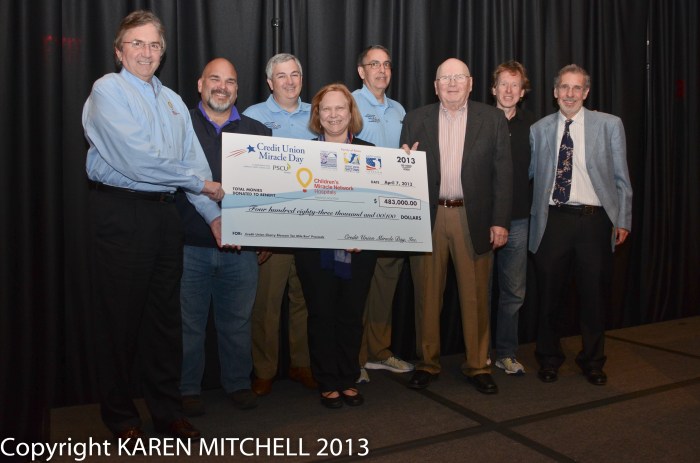
2002 Credit Union Miracle Day Network
10-Mile Finishers
In 2005 and 2021, the total finishers were 50% male and 50% female.
1973-2004 The % of males exceeded females.
2006-Present The % of females exceeds males
Categories: Features
 Runner's Gazette
Leave a comment