
Interview with Kim Conley by George Banker
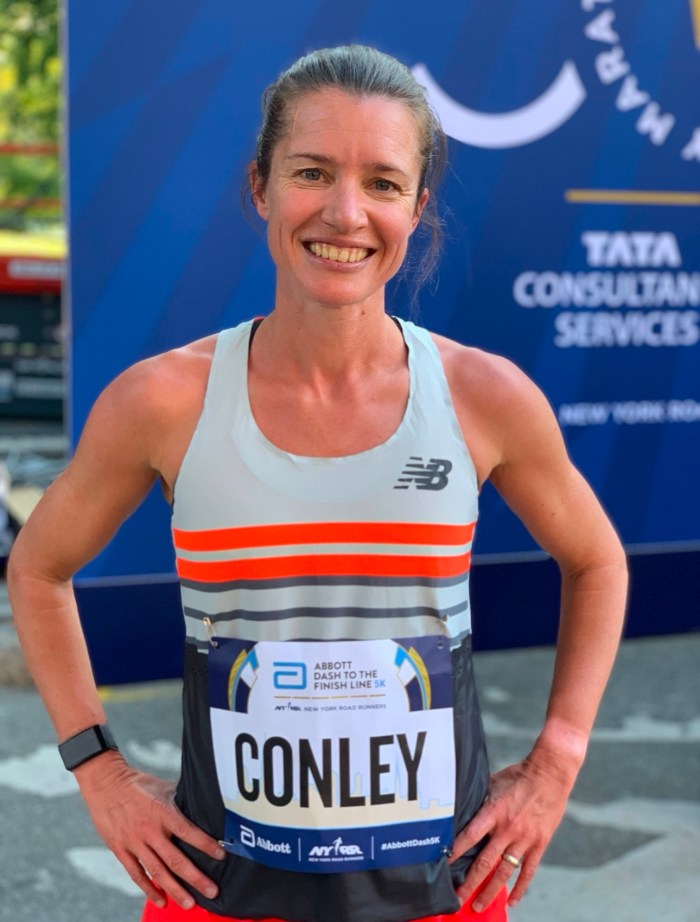
The definition of a “well-rounded individual,” according to the Oxford Learner’s Dictionaries, is an individual having a variety of experiences and abilities and a fully developed personality. This applies to Kim Conley, a 2019 graduate of the University of California Davis (UC Davis).
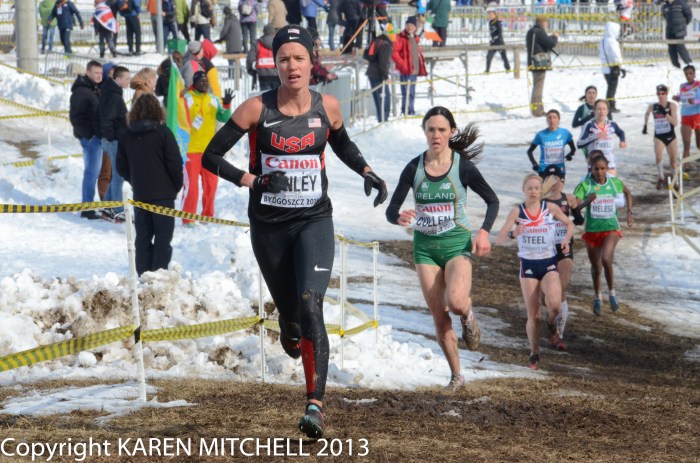
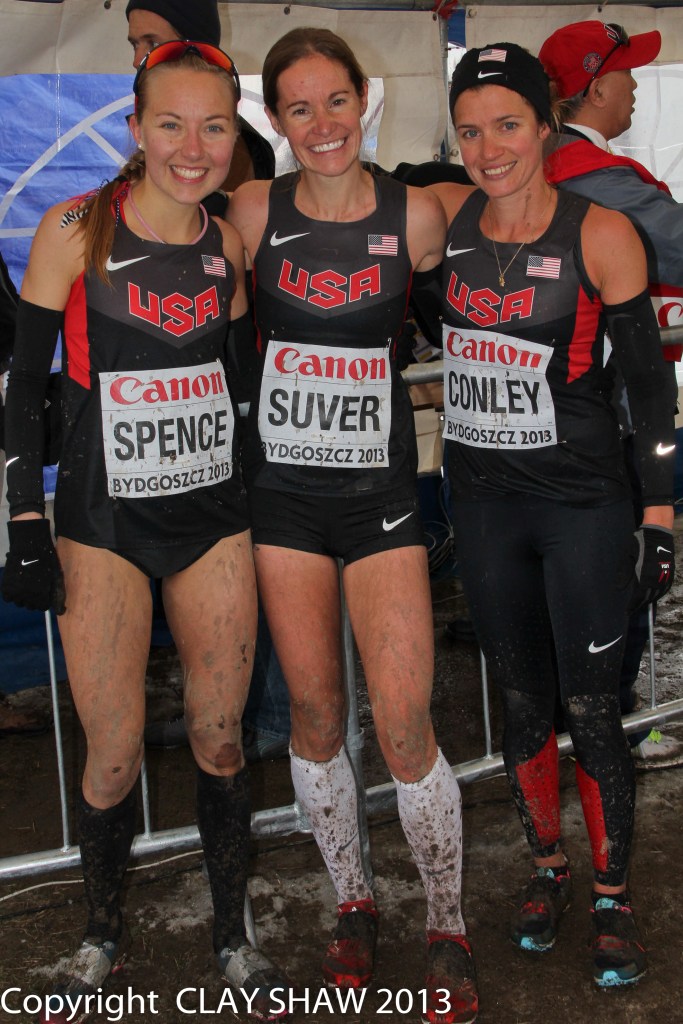
Conley has progressed through a variety of levels in her career, from high school, college, and the professional levels. She is a two-time Olympian at 5,000 meters. At the 2012 U.S. Olympic Team Trials at the close of the 12 ½ laps, she narrowly made the A standard with a time 15:19.17 and secured 3rd place. Watch “Incredible photo finish decides Team USA’s 5000m Olympians at 2012 trials | NBC Sports” at: https://youtu.be/dqdxuWmdsYI?si=dKmV20X3eVShwCfR
At the 2012 London Olympics, she placed twelfth in the semifinals heat with a time of 15:14.18.
At the 2016 Olympics in Rio de Janeiro, she placed 12th in the first round of the 5000-meter heat in a time of 15:34.39.
At the Pan American Games in Lima, Peru, Conley secured a bronze medal in the 5000 meters with a time of 15:36.95.
There is more to add to the list to include USA Track & Field titles.
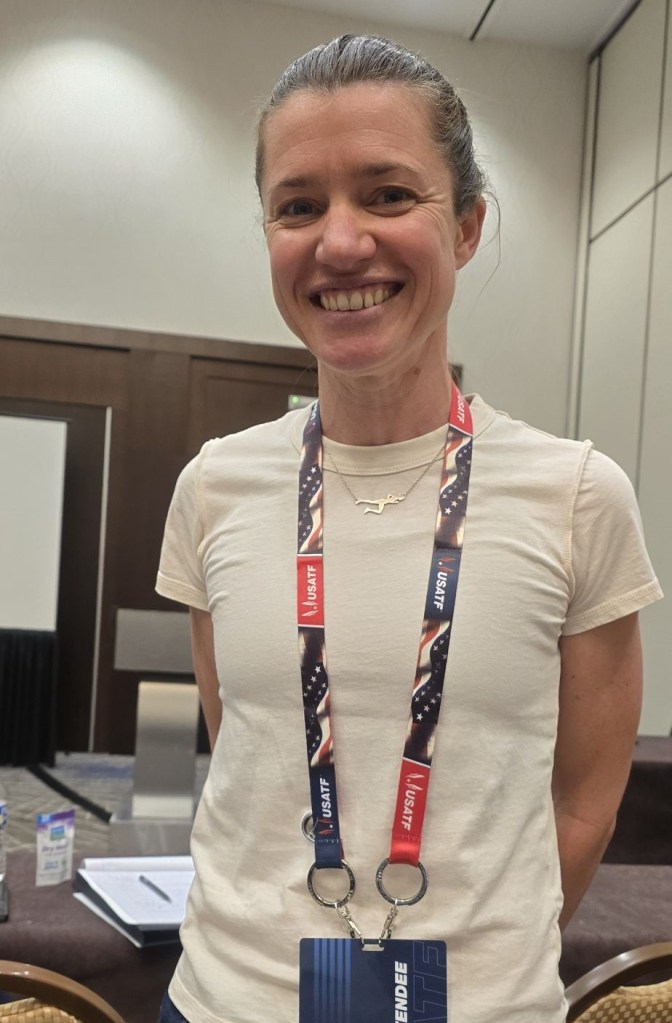
If you peel the pages back, it is easy to understand why Conley is the perfect match for the USATF Long Distance Running (LDR) position. The mixture of leadership, athletic accomplishments and being able to relate to athletes because she is one.
Angela Duckworth wrote in her book, “GRIT The Power of Passion and Perseverance,” the following, “Talent is how quickly your skills improve when you invest effort. Achievement is what happens when you take your acquired skills and use them.”
Add Conley’s favorite motivational quote, “It takes years of hard work to become an overnight success.”
Conley has covered a lot of miles from Montgomery High School in Santa Rosa, California and UC Davis. She has served on several USATF committees, which included the Athletic Advisory Committee (AAC). And Conley is a coach at Next Best Run (https://nextbestrun.com). “Since becoming a coach, I’ve realized how EVERY athlete—regardless of age, ability, or years spent in the sport—benefits from the power of the people they surround themselves with.”
Read the following to understand why Conley is the perfect fit to influence the forward movement of USATF Long Distance Running. Thank you, Kim, for giving Runner’s Gazette readers some additional insight into your career through this interview.
What was your WHY for lacing up your shoes when you started in the sport?
I joined my first track team, the Santa Rosa Express, when I was 11. I wanted to stay in shape during the spring, for soccer in the fall, but I loved track so much that I joined the cross-country team at my middle school the following fall. By the end of my freshman year of high school, I stopped playing all my other sports to focus on cross-country and track.
What was your transition from high school to college and then to professional?
I got recruited out of high school to run for UC Davis, where I spent five years developing. After graduating, I still felt like I had room for improvement and unfinished business with the sport. I became a volunteer coach in the program and continued training with the goal of qualifying for the 2010 USA Outdoor Championships and eventually the 2012 Olympic Trials. I continued to improve over the next three years, and by the time the 2012 Olympic Trials arrived, my sight line had shifted from just hoping to be there, to wondering if I could contend to make the Olympic Team. I ended up qualifying for the London Olympics by .04 seconds and signed my first professional contract in the days following that race.
During the above periods, were there times when you doubted your abilities?
Yes and no. If someone else had suggested in 2010 that I could be an Olympian in 2012, I never would have believed them. But I kept my sight line where I felt like my abilities were, so I never doubted my ability to achieve the next goal I set for myself. As I continued to achieve those reasonable goals, I was gradually working my way toward a level I couldn’t have imagined previously.
When do you know that you have given your best in training or within competition?
When I’m able to really push myself over the last third of a workout or race. If I go out too fast and slow down over that last third, then I know I haven’t executed correctly. When I manage my effort well and can push myself as hard as I can over the last third, then I feel like I’ve done the best I can.
Do you consider sports to be emotional?
Yes, and learning how to harness emotion and use it is a great tool for success. I’ve had great races where I went in angry, and fueling a race with anger can work in the short term, but it’s not possible to create successful race outcomes long term, off of anger. Gratitude has often worked better for me—feeling like I have had the good fortune to prepare to the best of my ability and be supported by people in a way that sets me up for success—helps me dig deep in races to honor the process and those people.
What have been some things which you gave up on achieving your goals?
Becoming the best possible athlete I could be, required me to be the opposite of well rounded—I liked to think of it as trying to be razor sharp at one thing. But I have a lot of interests and enjoy being social in ways that weren’t conducive to success, so I put some of my life on hold while I had a single-minded focus over running.
What is the distance where you excel the best?
My body of results would point to the 5000m, but I’ve really enjoyed racing the half marathon a few times and run some good miles.
Did you think that one day you would take part in the Olympics?
Prior to 2012, no, but between 2012 and 2016, I never doubted I could return to the Olympic stage.
What is the feeling of having Olympian associated with your name?
I’m proud of it; the Olympics are the pinnacle of the sport. I’ve loved running since I started with the Santa Rosa Express at age 11, and developing and ascending through the ranks of track and field to reach the top has been the most meaningful journey of my life so far.
What thoughts do you entertain in the last second before the start gun goes off?
I give myself one very easy job to do in the first few seconds of a race (something like “six quick steps”) and that way I just focus on that task and block out any other thoughts.
What have you learned about yourself up to this point in your career?
I truly love to compete. My favorite races, whether I win or lose, are the ones that come down to a sprint finish in the final 100m. I also can’t imagine ever not racing—as I look ahead to what lies beyond professional running for me, I will always have races on my schedule that I’m training for.
What is of importance during competition – place or time?
Place! I have so much more fun racing other people than trying to race the clock.
What was your motivation to move into coaching?
I love the sport and what running has given to my life. Through coaching, I get to help show new runners how running can enhance their lives, or work with established runners to ensure they continue to be fulfilled by the process of training and racing.
Are there qualities which you look for when you approached to coach a person?
Motivation. My base line expectation is that someone is choosing to take their running to the next level by hiring a coach and being excited to get the process underway.
What are some reasons you hear regarding why a person wants a coach?
The main reason our clients come to Next Best Run is for personalized coaching. Their goals range from running a race for the first time to trying to qualify for the Olympic Trials, but the common thread is that they want more than what they get out of a generic plan. They want to build a relationship with a coach that’s going to work with them 1:1 and tailor their training to capitalize on their unique strengths, address their weaknesses, and be along for the journey to achieving their goals.
When it comes to coaching, what is your philosophy?
First, that everyone is different, and needs vary, so there can’t be a cookie-cutter approach to writing training.
When it comes to the physiology of training, I believe that the body responds best to a variety of stimuli, and it’s best to vary the intensity of training within a week and from week-to-week. How you apply that to each individual is going to be a little bit different because of genetics, athletic background, and training development.
When it comes to the mental/emotional side of training, I believe the coach-athlete relationships forms a partnership, and I like to work with everyone to meet them where they are, help the training fit around the rest of life, and make sure that running makes life happier and less stressful.
What event stands out that assessed your abilities where you had to dig deep?
The marathon! I still haven’t mastered it.
How do you balance your life among family, training, racing, and coaching?
My husband has been my coach for my entire professional career, and now we own our coaching business, Next Best Run, together. For as long as we’ve known each other, our goals have been aligned, so life is always a blend of work/training/travel and having fun together throughout it all.
What are your thoughts for Long Distance Running (LDR) as you assume your new position with USA Track & Field?
I’ve been referring to the governance manual a lot in the last two weeks, and every time I flip past the first page, I notice the mission statement of USATF, which is to drive competitive excellence and popular engagement in the sport. Coming from an elite athlete background, and as I still represent the Athlete’s Commission on the Board of Directors, I will definitely put athletes front and center when it comes to decision making.
At the same time, the half of the mission that involves popular engagement has resonated with me, and I’m excited by the prospect of building a stronger bridge between the elite side of the sport and our membership and fans. With the proliferation of road racing and new runners in our country, the long-distance running division is an ideal place for USATF to make new inroads with runners and boost popular engagement for both track and field and road racing.
What do you wish the reader to know about Kim?
I love this sport and the people in it. If you see me at a race this year, please stop and say hello.
* ************
If you had to vote, is Conley well-rounded? I will add the following three adjectives to describe Conley in her actions: consistent, insistent, and persistent.
Categories: Athlete Profiles
 Runner's Gazette
Leave a comment